Background

BE-PROTECT

Belgian e-platform for Protein-based Refinement and Optimized Threat Evaluation using Computational AI-driven Technology.

Proteins and biothreats

The last decades have seen an explosion of our molecular understanding of biology, with direct implications for health and agriculture. Concurrently, natural biothreats are on the rise, driven by increasing human mobility, ecological niche disruption and climate change. With an ever-growing arsenal of advanced bio-molecular approaches at our disposal, the bioagents causing such threats can also be (re-)engineered with increasing ease, as can molecular therapies responding to threats.

Proteins are the key molecules of life that are targeted by bioagents or actively used by bioagents themselves. They are therefore essential to characterise biothreats at the molecular level and to formulate possible responses to them in any biodefence approach. They can also provide a functional, stable and precise differentiation between strains or species that may be highly similar genetically but behave differently in terms of pathogenicity.

Current experimental detection typically starts from genomic analysis, which limits interpretation. Transforming the genome information to the protein level can greatly enhance the potential to characterise bioagents, by looking for similarities with proteins from known organisms, identifying likely molecular modes of action, inferring host-pathogen protein interactions, and suggesting avenues for countermeasures, both short- and long-term.

Computational pipeline

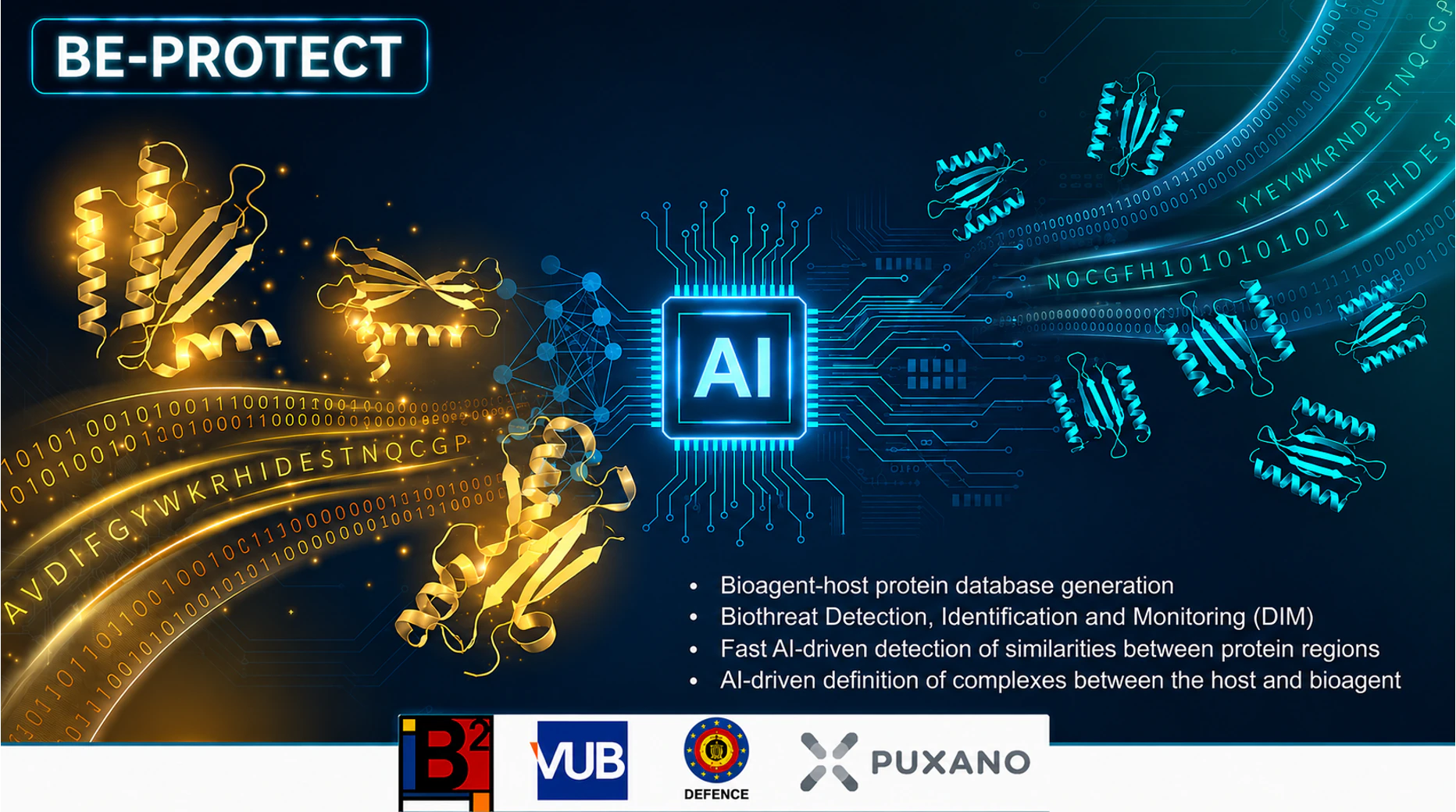
BE-PROTECT creates enhanced 'made in Belgium' biodefence measures aimed at optimising assessment, prevention, and preparedness, as well as response and recovery in the event of biological incidents. To do so, the project formulates a computational pipeline for extensive in silico protein characterisation that interprets experimental genome-level information on bioagents, naturally occurring or released with malicious intent.

The crucial novelty in the approach is that it also accounts for the non-folding flexible regions of proteins. Many pathogen mechanisms rely on such flexible regions to infect and interfere with host cells, but because of the difficulty in characterising and interpreting these regions, they are mostly ignored.

BE-PROTECT achieves this goal by combining publicly available data, available methods and responsible use of AI to identify the function and likely targets of bioagent proteins, compare them with annotated pathogen proteins and with host proteins, and then identify likely protein interactions and possible bioagent disruptor drugs through drug repurposing and AI-designed mini-binders.

The computational pipeline is intended to be fully dual-use with a public component for general public health measures and a private component for biodefence relating to sensitive bioagents, where the input data for the pipeline and its results can be handled securely in a fully parallel fashion.

Programme context

The DEFRA research programme is the result of cooperation between the Belgian Science Policy Office (BELSPO) and the Royal Higher Institute for Defence (RHID). RHID manages the programme, funding, and follow-up of selected projects.

BE-PROTECT belongs to DEFRA Theme 5: Biotechnologies and Human Enhancement/Augmentation (BHEA).

Consortium model

The project is open to the Belgian scientific community, preferably in a triple-helix composition where academia and industry work together with public research institutions to foster research and technology within Defence.

BE-PROTECT brings together VUB, Belgian Defence partners, and PUXANO to build made-in-Belgium biodefence measures with secure public and private computational components.

Biodefence scope

The aim is to assess, prevent, prepare for, respond to, and recover from biological events whether they arise from deliberate or accidental release or from natural outbreaks.

Dual-use impact

The same molecular intelligence can support outbreaks of natural origin, deliberate releases, tactical decision making, and readiness against unknown or emerging pathogens, while also supporting broader national and European collaboration. The platform is designed to connect with broader European and NATO initiatives, improving collaboration and extending the project’s scientific and operational reach.

Beyond drug repurposing to counter bioagents, the project intends to develop novel protein binders to bioagent proteins, further enabling innovation towards biosensors or novel drugs. The generic nature of the pipeline will also enable it to connect to other developments within the EU or NATO and enable direct interdisciplinary collaborations with other DEFRA and European defence or NATO STO initiatives.